Solvio AI: Commendation for Operations & Critical Learnings
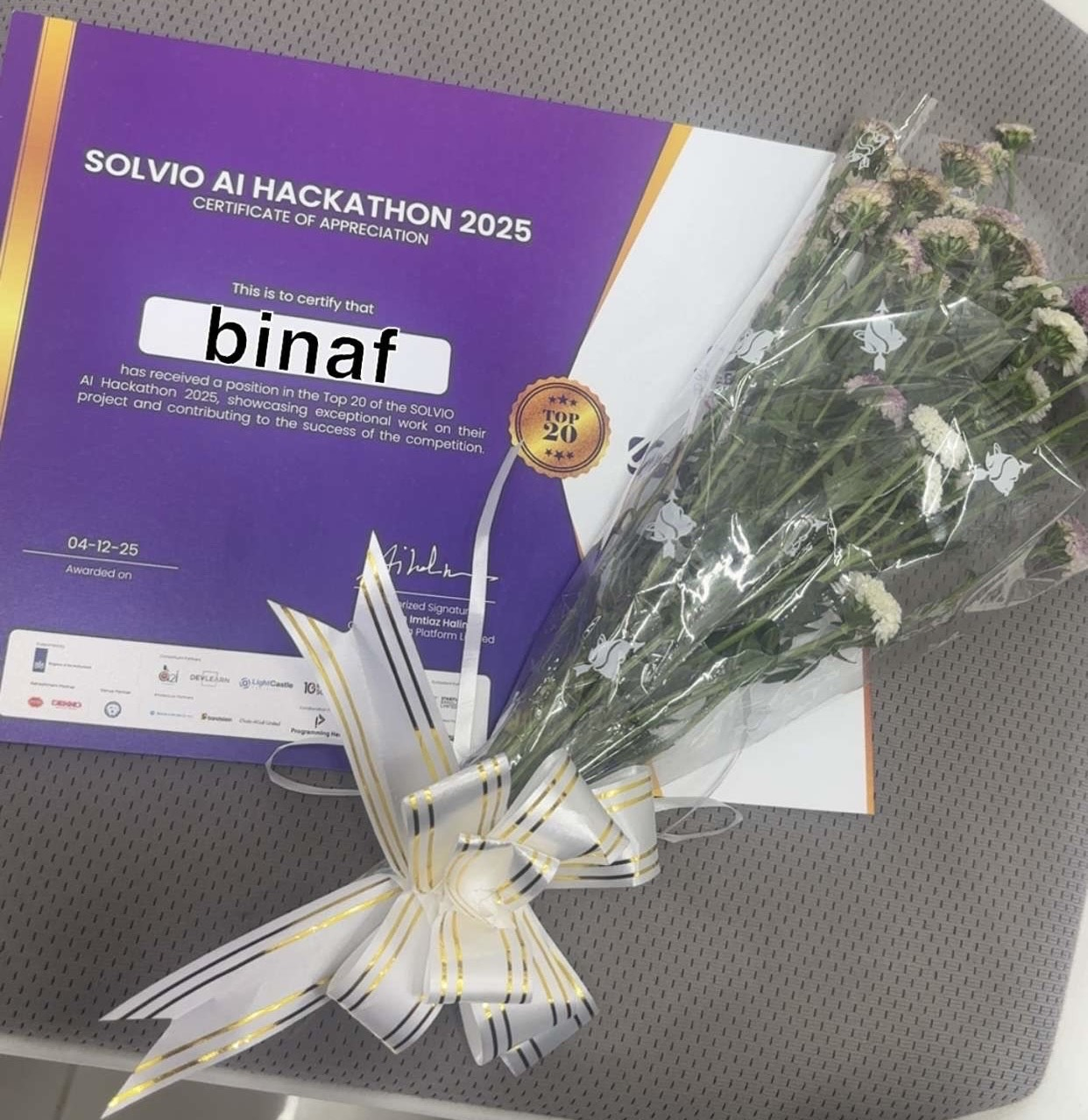
My recent participation in the Solvio AI Hackathon provided a wealth of professional insights, particularly regarding the execution of large-scale events and the strategic reality of innovation contests. I’m proud to share that our team achieved Top 20 out of 900 competing teams—a significant milestone in my first hackathon experience.
Operational Excellence by Sheba.xyz
First and foremost, a massive commendation to Sheba.xyz for their phenomenal organizational management. The operational execution was truly flawless. They succeeded in creating an incredibly comfortable, welcoming, and seamless environment, the gold standard for event logistics. Their commitment to participant wellbeing was outstanding and made the intense competition schedule feel genuinely productive and supportive.
Strategic Shift: From Hackathon to BizComp
While branded as a “Hackathon,” the competition organized by Sheba.xyz and SheSTEM functioned distinctly as a Business Case/Startup Competition (BizComp). This experience served as a powerful lesson:
The Primacy of Presentation: Success heavily correlated with projects that were LLM wrappers getting priority. This signaled that the judges prioritized the immediate commercial viability and presentation of the front-end solution over the complexity or novelty of the underlying technical architecture.
Market-Readiness Focus: The challenge highlighted the professional necessity of aligning innovation with stakeholder and market-readiness expectations, sometimes at the expense of deep technical R&D.
Critique of Mentorship & Technical Guidance
In contrast to the operational support, the technical mentorship provided was the most significant area for improvement, revealing a lack of expertise across several domains:
Deficiencies in ML/Tech Stack Guidance: Mentors demonstrated a weak understanding of Machine Learning (ML) principles and were ineffective at guiding us through modern tech stacks.
Outdated Framework Advice: Guidance often suggested the use of outdated frameworks (e.g., advising Postman for tasks where more contemporary solutions are standard), indicating a gap in current industry practices.
Lack of Trust in Data: A particularly discouraging moment arose when discussing our synthetic dataset, a necessity due to the lack of available South East Asian data for our software. We were met with outright disbelief, specifically the phrase “I don’t believe you.” This lack of understanding regarding the real-world constraints of working in emerging markets severely undermined the purpose of expert mentorship.
Moving forward, I urge organizers to prioritize rigorously vetted, domain-expert mentorship to ensure participants receive constructive and accurate technical guidance that reflects current industry standards and regional data realities.
Conclusion
I look forward to applying these comprehensive learnings: the immense value of strong operational teams, the strategic necessity of market alignment, and the critical need for credible technical leadership, to my professional growth.
This hackathon experience, while revealing certain industry realities, has been invaluable in shaping my understanding of how innovation competitions function and what truly drives success in collaborative technical environments.
Originally shared on LinkedIn